
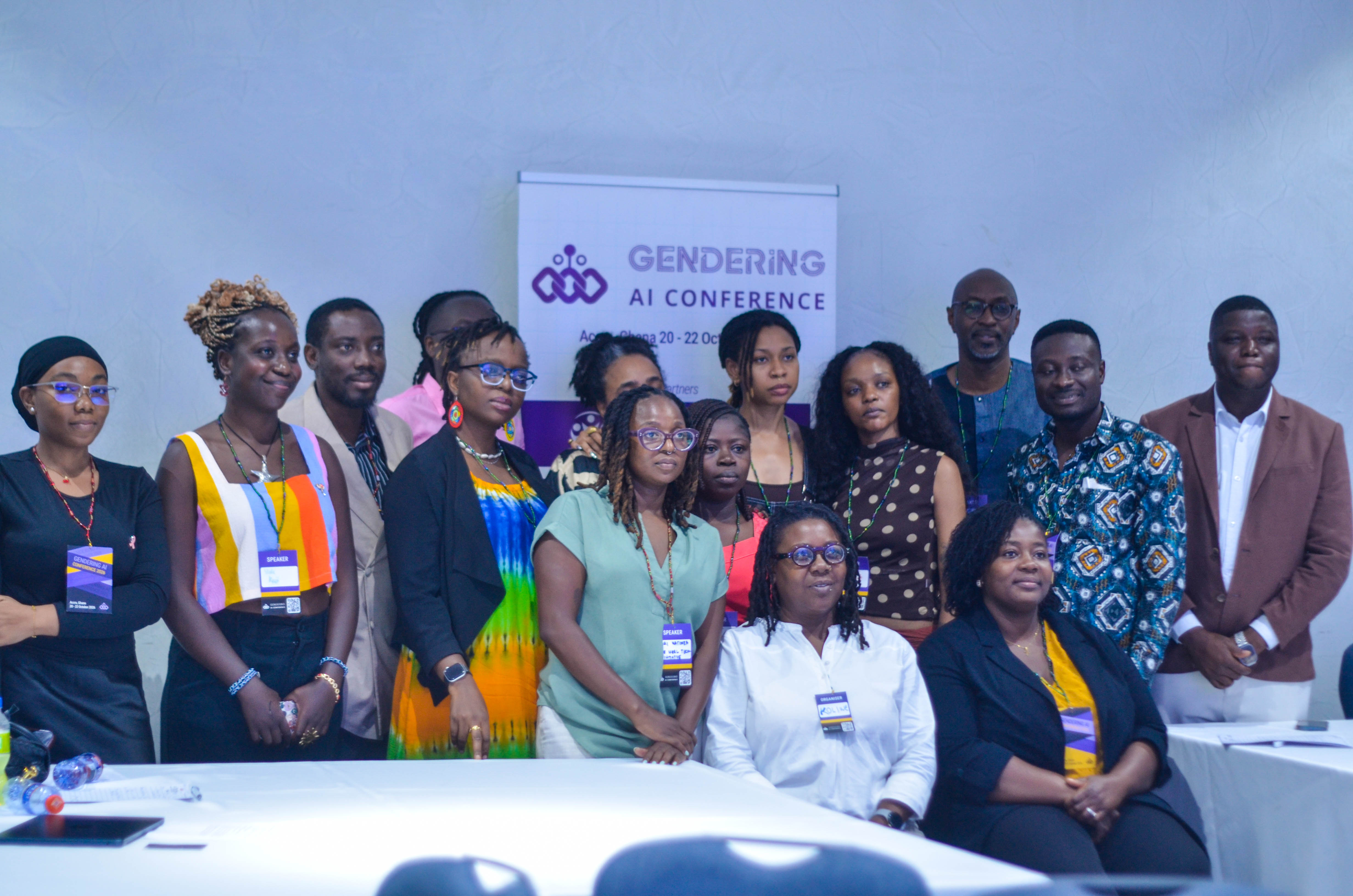





DIPPER Lab contributes to GRAIN session on GEDI framework at Gendering AI Conference
The DIPPER Lab at the Kwame Nkrumah University of Science and Technology (KNUST) has contributed to discussions on gender equality, equity, diversity and inclusion (GEDI) in Artificial Intelligence (AI) development at the Gendering AI Conference 2026.
This session organized by GRAIN enabled the Lab to share its it’s experience using the GEDI framework under the Lab’s ObaaSIWA project through the EmpowerHerAI initiative by the GRAIN Network, as part of the Artificial Intelligence for Development (AI4D) Africa initiative.
The session featured a presentation titled “A Framework to Test GEDI Integration during Innovation Development – Gender and Responsible AI,” with contributions from Prof. Eric Tutu Tchao, Scientific Director of DIPPER Lab; Dr. Jean-Claude Bidogeza, Director of Research and Scientific Development at Ipar Think Tank; and Dr. Adedeji Adeniran, Director of Research at the Centre for the Study of the Economies of Africa (CSEA).
Speaking during the session, Prof. Tchao shared lessons from the ObaaSIWA Project, where assessments of the Smart Indigenous Weather App revealed that some male farmers were handing their phones to their wives to access the application.
He said the discovery prompted the team to change its approach by encouraging male farmers to bring their wives to training sessions.
“As an innovator, if you go through this and the problem tells you that there is something wrong, then you also need to change the approach that you use to solve the problem,” Prof. Tchao said.
He explained that the experience highlighted the need for innovators to assess how people use technology and adapt their methods to ensure that women are not overlooked in the development and deployment of digital solutions.
Dr. Adedeji Adeniran, Director of Research at the Centre for the Study of the Economies of Africa (CSEA), called for governments to build AI governance frameworks around the experiences and needs of innovators.
“I think governments should start from innovators rather than from governments,” he said.
He also stressed the importance of establishing ethical standards to guide AI development and use, ensuring that governance measures address harmful behaviour without unfairly targeting others.
Dr. Jean-Claude Bidogeza, Director of Research and Scientific Development at Ipar Think Tank, thanked the organisers for the opportunity to participate in the session and exchange feedback.
The discussions highlighted the importance of integrating GEDI principles into innovation development to ensure that AI technologies reflect the experiences and needs of diverse users and promote more inclusive outcomes.