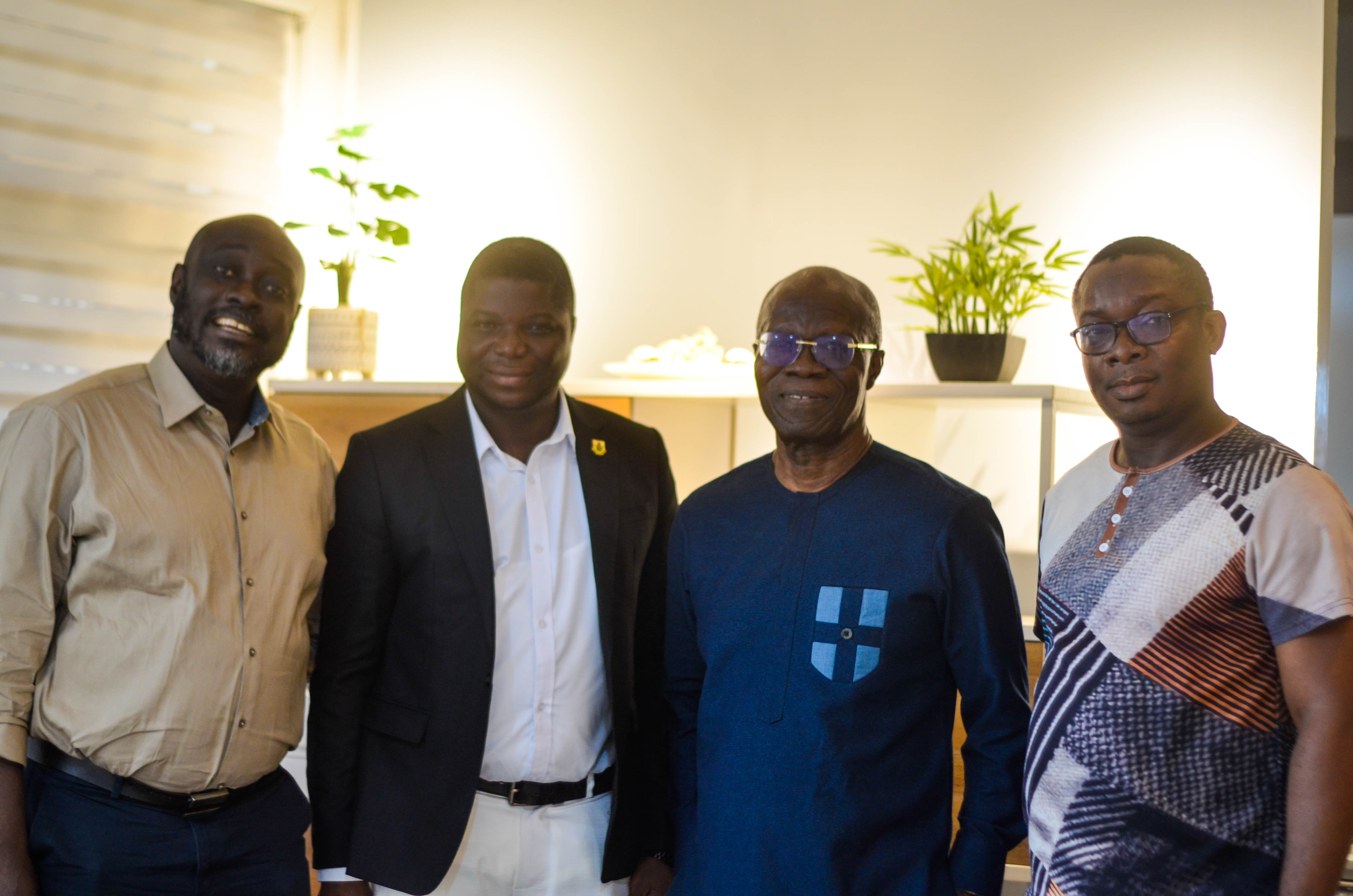

Provost of College of Engineering Engages DIPPER Lab on Strengthening Research and Scaling Innovations
The Provost of the KNUST College of Engineering, Prof. Kwabena Biritwum Nyarko, has paid a visit to the DIPPER Lab to assess ongoing research activities and discuss the next steps for scaling the Lab’s innovations.
Prof. Nyarko’s visit forms part of the College’s broader agenda to support engineering research that directly responds to national development needs.
The engagement also forms part of an internal consultation to explore modalities for setting up a local production facility on the KNUST campus to support training, research, prototyping, and manufacturing.
At the Lab, the Scientific Director, Prof. Eric Tutu Tchao, and the Deputy Scientific Director, Dr. Andrew Selasi Agbemenu, provided updates on current projects, ongoing trials, and progress made since the Lab’s most recent deployments.
A major focus of the engagement was the rollout of FarmSense, which was launched last month in partnership with Sesi Technologies.
The Provost discussed how the College and the Lab can work together to position the platform to support national agricultural priorities and contribute to improvements in farm productivity.
The discussions also covered the need to build local production capacity for FarmSense in anticipation of rising demand. Prof. Nyarko emphasised the importance of ensuring that innovations developed within the College can be manufactured locally, scaled efficiently, and sustained over time.
Another key area of interest was the commercialisation of research outputs.
The team explored practical approaches the Lab can adopt to bring its innovations to market, generate revenue for sustainability, and strengthen the College’s research ecosystem.
Prof. Nyarko also highlighted the importance of retaining top-performing graduates within the College. The DIPPER Lab team and the Provost discussed opportunities to engage young engineers and researchers in ongoing work at the College’s R&D centres, ensuring continuity and building long-term capacity.
The visit reflects the College of Engineering’s commitment to supporting technology development and expanding the impact of its research on national development