
DIPPER Lab’s Smart Biogas Innovation Targets Carbon Emission Reduction at EJP C-arouNd Workshop
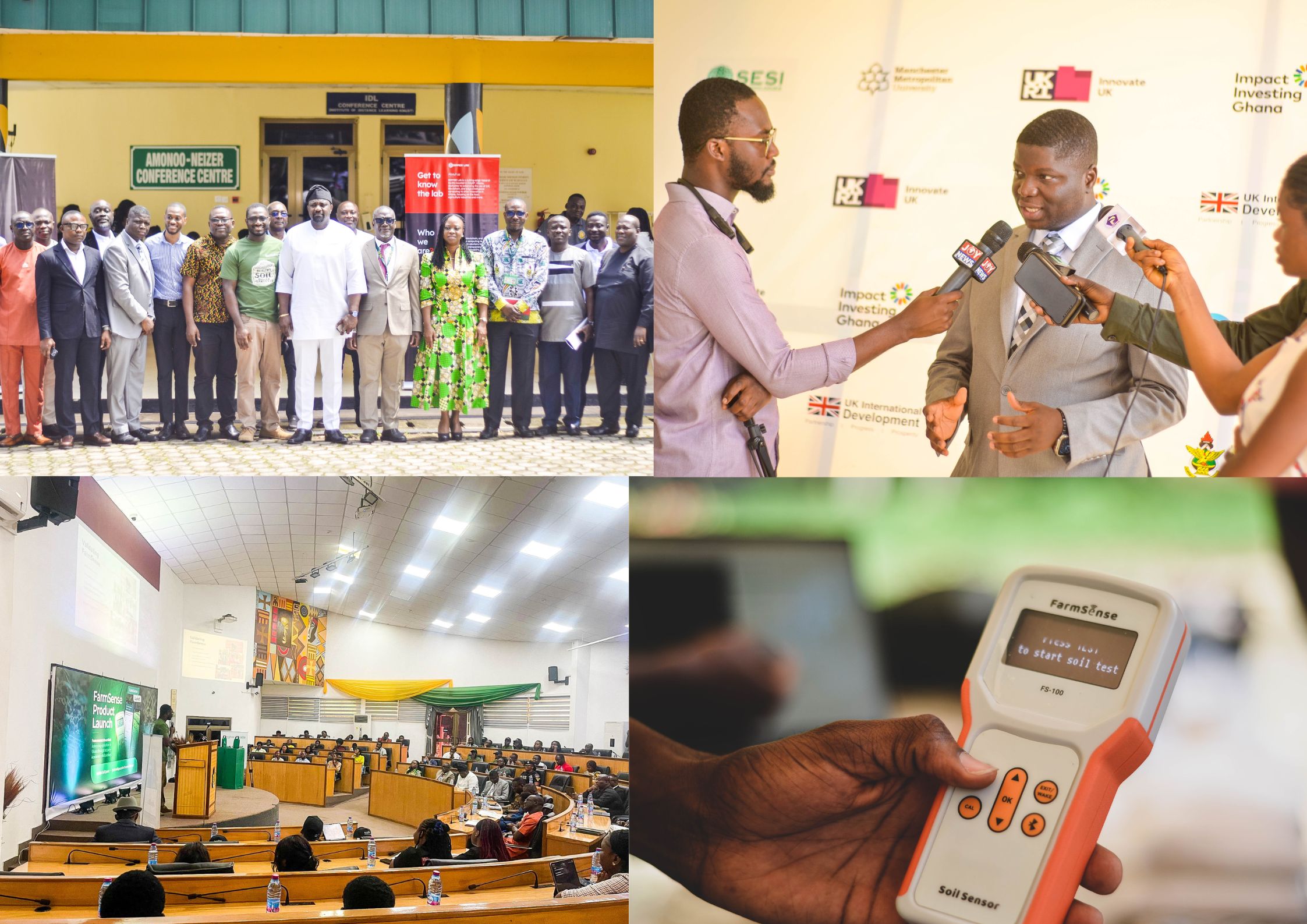
The Distributed IoT-Platforms, Privacy and Edge-Intelligence Research (DIPPER Lab) shared its latest innovation at the European Joint Programme (EJP) C-arouNd Project workshop hosted at the Kwame Nkrumah University of Science and Technology (KNUST), Kumasi.
The week-long event brought together experts to discuss regenerative agriculture, carbon storage, and greenhouse gas emissions.
On the third day of the workshop, Lemuel Siaw, a researcher with DIPPER Lab, presented on Smart Biogas Technology (SBT), a digital monitoring system that improves the performance of biogas plants using real-time sensor data.
The workshop, convened by Dr. Caleb Melenya Ocansey, DIPPER Lab’s Lead for Partnerships, featured technical presentations from researchers and partner institutions across Africa, Europe, South America, and North America, focusing on digital innovations for sustainable agriculture and emission reduction.
Explaining how SBT works, Mr. Siaw said, “Smart Biogas Technology gives operators continuous data on temperature, pressure, humidity, and methane levels. This helps them maintain the right conditions for biogas production and quickly detect performance issues before they cause losses.”
He added that SBT not only boosts efficiency but also captures methane that would otherwise be released into the atmosphere.
“By turning waste into clean energy, we’re cutting methane emissions and providing an alternative to fossil fuels like LPG and firewood. It’s a practical step toward zero-waste agriculture,” he said.
A functional prototype has already been installed at a biogas facility in partnership with DAS Biogas, supported by funding from 3E’s for Africa.
The collaboration has enabled real-world testing, data validation, and design improvements.
Looking ahead, the team plans to scale SBT deployment across multiple biogas plants, integrate AI-driven analytics for predictive optimization, and improve the hardware for long-term use in rural settings.
Future versions will also support carbon tracking to help users access carbon credits and sustainability financing.
He however, called for wider collaboration “We welcome more partners, including research institutions, farmers, and clean energy stakeholders, to join us. Together, we can expand the reach of Smart Biogas Technology and maximize its impact on reducing carbon emissions.”
The EJP C-arouNd workshop provided a platform for DIPPER Lab to demonstrate how technology-driven research can support clean energy adoption, regenerative agriculture, and low-carbon development.