CarbonXtras partners review project and assess next steps for Ghana’s capacity for greenhouse gas emissions monitoring
Partners under the CarbonXtras project have met to review the outcomes of the completed initiative and discuss its relevance for Ghana’s agricultural emissions monitoring and climate reporting systems.
CarbonXtras is made up of The James Hutton Institute (JHI)-UK, the CSIR-Crops Research Institute (CSIR-CRI) - Ghana, the Embrapa - Brazil and SonaVision Ltd - UK.
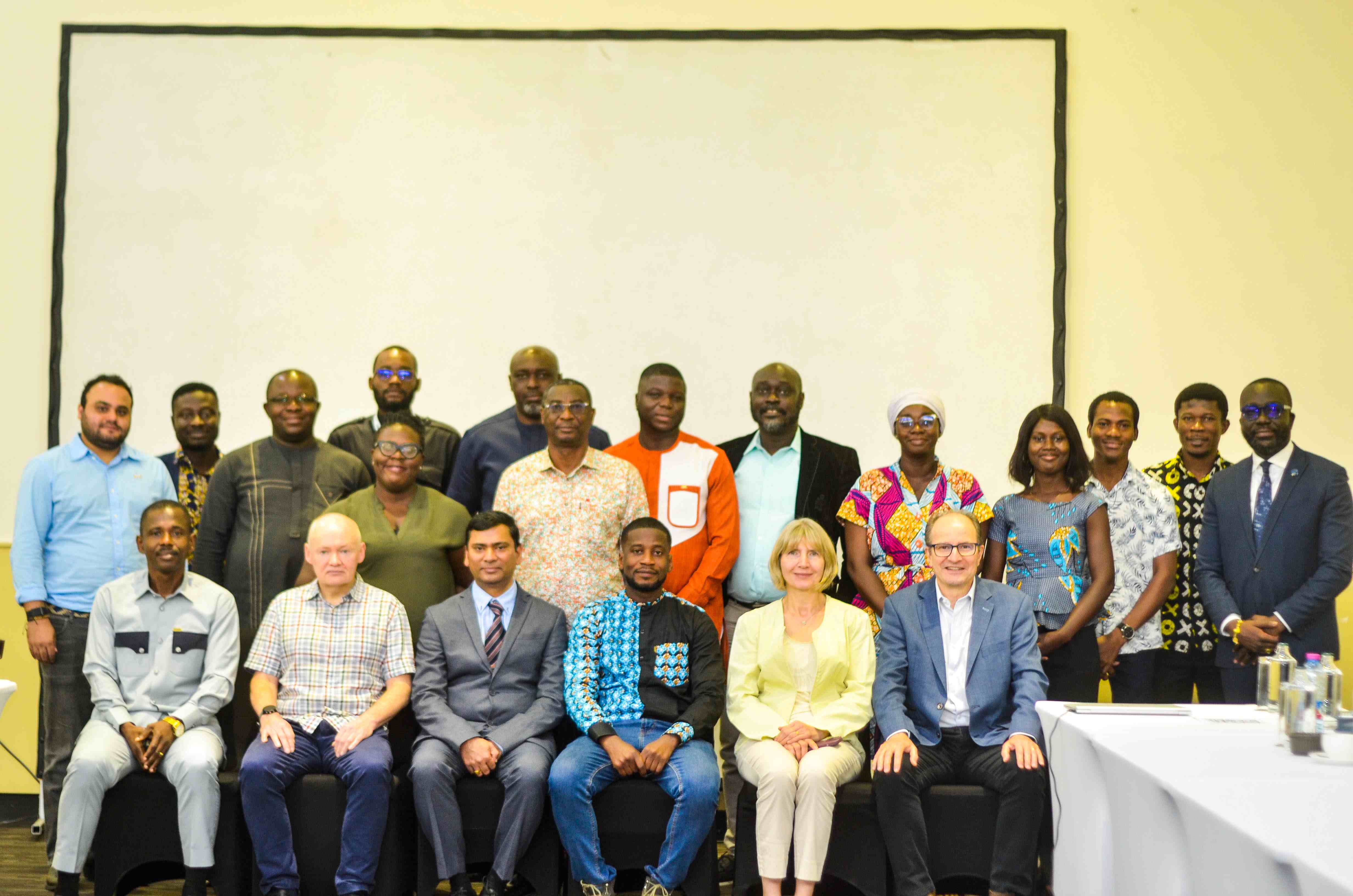
The review workshop brought together institutions from research, government, regulation and farmer groups to assess field results, data systems and policy implications.
Participants included the National Communication Authority (NCA), the Association of Natural Rubber Actors of Ghana (ANRAG), , the West Africa Food System Resilience Programme (FSRP), the Commonwealth Secretariat -UK, the Carbon Market Office of the Environmental Protection Agency (EPA), the Kwame Nkrumah University of Science and Technology (KNUST), the African Initiative for Nature-Based Solutions (AINAS), the Peasant Farmers Association of Ghana, CSIR - Institute for Scientific and Technological Information (CSIR-INSTI), and The Forum for Agricultural Research (FARA).
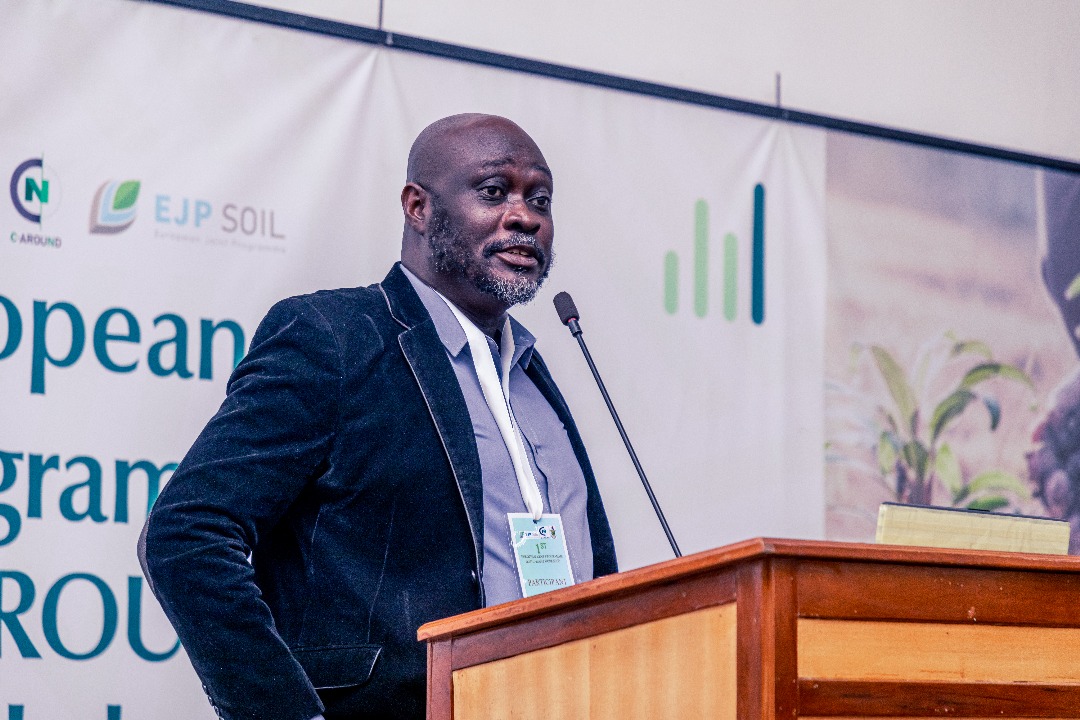
Welcoming stakeholders at the workshop, Prof. Maxwell Darko Asante, Director of CSIR-CRI, said “continuous and long-term monitoring will make it possible to measure soil conditions, greenhouse gases, emissions and production levels at specific locations”.
He noted that “this approach moves agriculture from a system guided by experience to one supported by verified data. The development is timely for government”.
The Scientific Director of the DIPPER Lab at KNUST, Prof. Eric Tutu Tchao, said the partnership under CarbonXtras has delivered results.
He said “the project has produced a working tool that can be optimised for Ghana’s environment.
The project moves research from theory to practical use and this provides a product that can impact farmers directly”.
Prof. Tutu Tchao added “the activities carried out under CarbonXtras mark the beginning of the next phase. He noted that the platform has been set for strategic partnerships and structures that can sustain the initiative”.
Dr. Caleb Melenya Ocansey, Lead for Ghana and Co- Principal Investigator of the CarbonXtras project, presented on gaps in Ghana’s climate and agricultural data systems.
He said, “CarbonXtras is not simply more data.
“It is a shift from estimating to measurement, from static data sets to continuous evidence,”
He added that “scaling the system to regional and national levels will support the development of a national reporting and MRD platform.
Dr. Beata Emoke Madari, Co- Principal also reviewed field testing and pilot implementation.
She outlined how data was collected from farms under the project to aid in realtime monitoring, reporting and verification to help farmers to crucial information in order to enhance farm productivity, climate resilience and climate finance.
Dr. Jagadeesh Yeluripati, Lead Principal Investigator of the CarbonXtras project from JHI, UK spoke on system localisation for Monitoring, Reporting and Verification (MRV) processes.
He explained how the digital twin MRV system were adapted for use in the various regions in Ghana, including Ejisu – semi deciduous zone, Kintampo – transition zone, Tamale -guinea savanna and Navrongo – sudan savanna
David Donnelly demonstrated on the use of the RETINA app and its applicability in Ghana. Heshowed how the system supports environmental data collection and reporting.
Dr. Pedro Luiz Oliveira de Almeida Machado discussed policy pathways for scaling the project’s outcomes. Lessons from implementation were also presented.
A panel discussion lead by Dr. Caleb Melenya Ocansey examined whether greenhouse gas monitoring can be integrated into Ghana’s agricultural and climate systems.
Dr. Enoch Bessah from the AINAS explained that greenhouse gases such as carbon dioxide, methane, and nitrous oxide trap heat in the atmosphere and drive global warming. Agriculture contributes primarily through methane from livestock and rice systems, and nitrous oxide from nitrogen fertilizers.
CSIR-INSTI, ANRAG, FSRP and the Commonwealth Secretariat discussed governance and data management. They examined whether agricultural environmental data should be treated as national digital infrastructure.
The Peasant Farmers Association of Ghana expressed concerns regarding the collection of data from farmers, noting that many farmers are hesitant because previous technologies and tools introduced by external innovators often provided little visible or direct benefit to them.
The West Africa Food System Resilience Programme (FSRP) described CarbonXtras as transformative and called for partnership in verifying innovative climate-smart tools developed by young people in Ghana, stressing the need for credible, evidence-based validation.
ANRAG raised issues related to traceability requirements in export markets. The association noted the need for verified data.
Participants also discussed whether Ghana can verify soil carbon or methane reduction claims.
They examined who should host agricultural environmental data and how farmer data can be protected.
All stakeholders acknowledged that CarbonXtras represents a significant step forward, particularly because of its continuous data collection capacity and its robust verification framework. There was broad agreement that the system will strengthen credibility in environmental monitoring, and the FARA expressed strong interest in seeing it scaled across Ghana and Africa.
The meeting ended with the launch of the MARVEL-NET: Monitoring, Analysis, Reporting and Verification for Effective Low-carbon Climate Resilience and Mitigation Network by the Lead Principal Investigator, Dr. Jagadeesh Yeluripati.