
FarmSense Set for October 20 Launch as Stakeholders Confirm Readiness
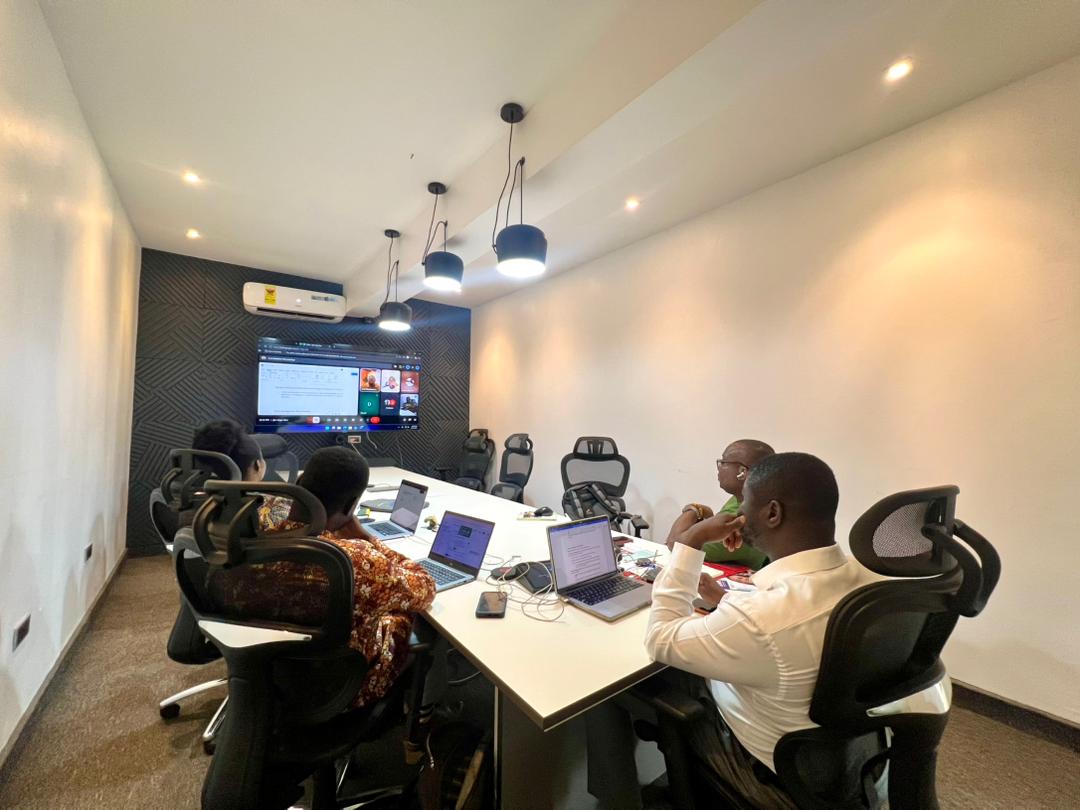
With the launch of FarmSense set for October 20, partners and stakeholders have confirmed that the system is ready for deployment, following the sixth Local Management Committee (LMC6) meeting held on October 8.
The FarmSense project, part of the Africa Agri-Tech Knowledge Transfer Partnership (KTP), is designed to support smallholder farmers with soil analysis, crop recommendations, and nutrient planning through a combination of hardware, software, and machine learning.
During the meeting, it was announced that the team has secured additional funding from the UK’s Research and Innovation Systems for Africa (RISA) programme.
The funding will support commercialisation activities as the project transitions from development to deployment.
Isaac Sesi, CEO of Sesi Technologies and the project’s Business Lead, noted the importance of this funding and acknowledged the collaboration between KNUST and MMU.
He also highlighted the connections made with other KTP initiatives in Ghana.
Musah Ibrahim, the KTP finisher, presented a full technical update.
Key points included the completion of the second-generation FarmSense hardware, including sensor integration and field testing; finalisation of the mobile and web platforms, with backend systems, databases, and interfaces fully built; deployment of machine learning models for NPK inference, yield estimation, and crop recommendations; integration of a wallet system for subscription and payment management; and development of a large language model (LLM) to generate simplified reports for farmers.
Documentation for all major components has been completed. Field testing has validated system performance, and final refinements are being made based on user feedback.
John Clayton, KTP Advisor, commended the team for meeting and exceeding technical targets.
He stated that “the solution is ready to be introduced to farmers”.
Dr. Mohammed Al-Khalidi, MMU Knowledge Base Lead, and Prof.Ali Bashir, MMU Knowledge Base Supervisor, reiterated that the project team is pleased with the outcomes.
“Many of the accomplishments were not envisioned at the outset. The development has progressed rapidly and allowed for further outputs and improvements,” they said.
Prof. Eric Tutu Tchao, Scientific Director of Dipper Lab, led the academic team from KNUST and reported positive outcomes.
The models and frameworks developed are expected to lead to future research publications. The project is contributing to ongoing research in machine learning applications for agriculture and will also be used in future student projects.
As the launch approaches, the team will continue to collect data to improve model performance and explore feedback-based enhancements to the solution. Discussions are ongoing with other Agri-KTP projects for potential collaborations after launch.