
Mackleode Ben-Boulo is a biomedical engineer and research assistant at the Distributed IoT Platforms, Privacy and Edge-Intelligence Research (DIPPER) Lab at the...
Mackleode Ben-Boulo is a biomedical engineer and research assistant at the Distributed IoT Platforms, Privacy and Edge-Intelligence Research (DIPPER) Lab at the Kwame Nkrumah University of Science and Technology (KNUST), Ghana. He holds a Bachelor of Science in Biomedical Engineering from KNUST, where he developed a strong foundation in designing healthcare technologies and solving real-world clinical challenges through engineering. His professional focus sits at the intersection of medical device design and AI security.
At DIPPER Lab — a research center dedicated to advancing secure, locally-relevant technology solutions through Internet of Things (IoT), edge intelligence, and trustworthy computing — MacLeod contributes to applied research that enhances healthcare outcomes in resource-limited contexts. DIPPER Lab’s mission emphasizes creating affordable, transparent, and resilient technologies that address pressing societal needs such as healthcare accessibility and data security.
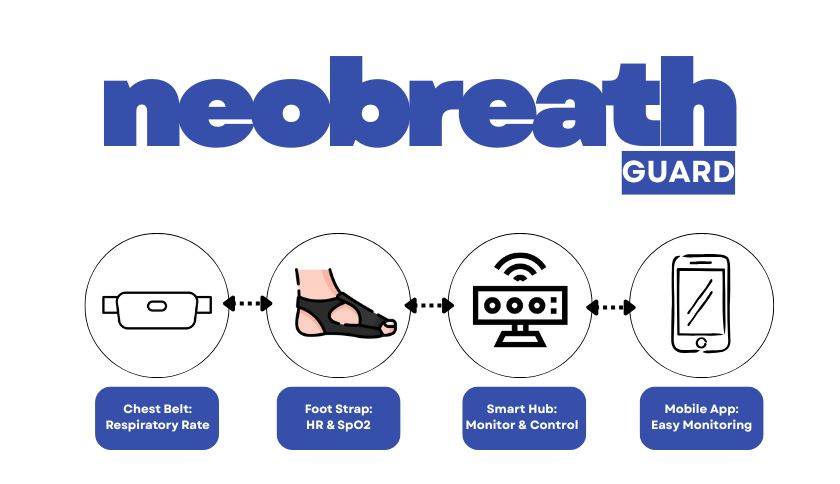
Within this multidisciplinary environment, Mackleode supports the development of medical hardware and embedded systems that are tailored to local anthropometric and clinical requirements. He plays a role in the NeoBreath Guard project — a cost-effective neonatal apnea detection and alert system designed for use in both clinical and home settings — contributing to sensor integration, signal acquisition, and the practical implementation of device modules that capture vital physiological metrics such as breathing rate, oxygen saturation (SpO₂), and pulse.
Mackleode’s technical interests include secure AI implementation in embedded systems, ensuring that intelligent medical devices operate reliably even under adversarial conditions. He is particularly motivated by the need for context-aware, cost-sensitive design that can empower caregivers and healthcare professionals with actionable physiological data to improve patient outcomes.
His ongoing work aligns with broader initiatives at the lab to couple rigorous engineering principles with scalable innovation.
Mackleode aspires to deepen his expertise in biomedical systems engineering and secure intelligent devices, with future goals focused on developing technologies that are sustainable, locally relevant, and capable of transforming health systems across West Africa.