Digital Broselow: An AI Tool for Ghanaian Pediatric Emergency Height
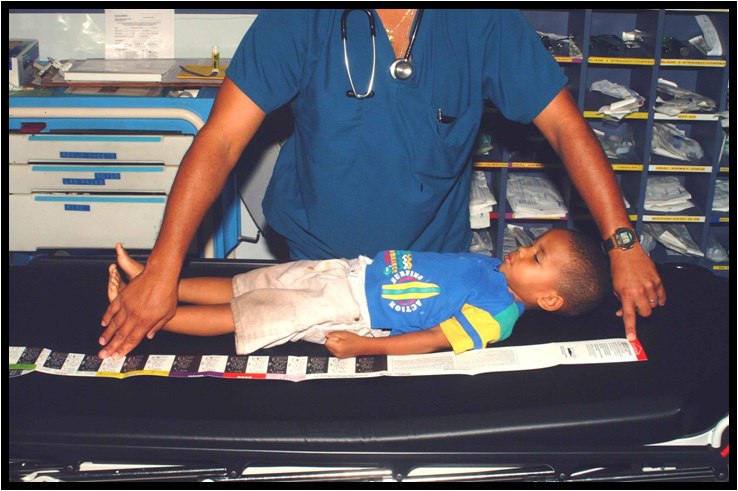
Accurate height and weight measurement is critical in pediatric care, particularly in
emergency settings as it informs accurate drug dosing. Weighing a critically ill child is impractical,
hence weight is often estimated and used as a basis to offer emergency care. Medication errors in
Paediatric emergency departments are prevalent, ranging from 10% to 15%, with dosing errors
being the most common, accounting for 39% to 49% of reported errors. These errors primarily
stem from inaccurate weight estimations or dosage miscalculations. Most existing estimation tools
are based on non-African anthropometric data, which most often do not reflect the growth patterns
of Ghanaian children, leading clinicians to rely on visual judgment and increasing the risk of
dosing errors.
The Digital Broselow project at Dipper Lab is an AI-driven initiative designed to provide
rapid, non-contact height and weight estimates for children under twelve, specifically tailored to
the Ghanaian population. The project integrates biomedical engineering, computer vision, and
clinical feedback to create a system that meets local healthcare needs while remaining practical for
use in emergency and hospital settings.
The AI model predicts height and weight using age information combined with visual cues
from images. Data collection involves images, heights, weights, and ages of children obtained
from hospital and school settings through a simple web application. Images are preprocessed by
blurring faces to ensure privacy, segmenting children from the background, and normalizing and
augmenting data to improve model performance. Grad-CAM visualization is incorporated to
ensure that predictions are informed by relevant anatomical features, providing interpretability and
confidence in model outputs.
Preliminary testing on early datasets has shown promising results, demonstrating the potential
to outperform existing estimation tools, including widely used tapes, when applied to Ghanaian
children. This evidence supports the system’s ability to improve the accuracy of pediatric
measurements in emergency scenarios and to reduce the risk of dosing errors.
Key Innovations
- Locally Tailored Design: Trained on Ghanaian pediatric data, the system provides context-specific predictions that reflect local growth patterns.
- Non-Contact Measurement: Height and weight can be estimated directly from images, minimizing handling and improving safety.
- Preliminary Results Show Potential: Early testing indicates strong performance, signaling confidence in its eventual clinical utility.
The Digital Broselow project demonstrates Dipper Lab’s commitment to developing AI�
driven healthcare innovations that are safe, effective, and contextually relevant. Upon completion,
the system will provide an accurate, efficient, and reliable tool to support pediatric care in Ghana,
with potential applicability across similar healthcare settings in Africa and beyond.