
Dr. Andrew Agbemenu, Prof. Eric Tchao, Mr. Anthony Jacklingo Kwame Quansah Junior, Mohammed Al-Khalidi, Bright Yeboah-Akowuah, Theresa-Samuelle Maame Atwemaah Adjaidoo
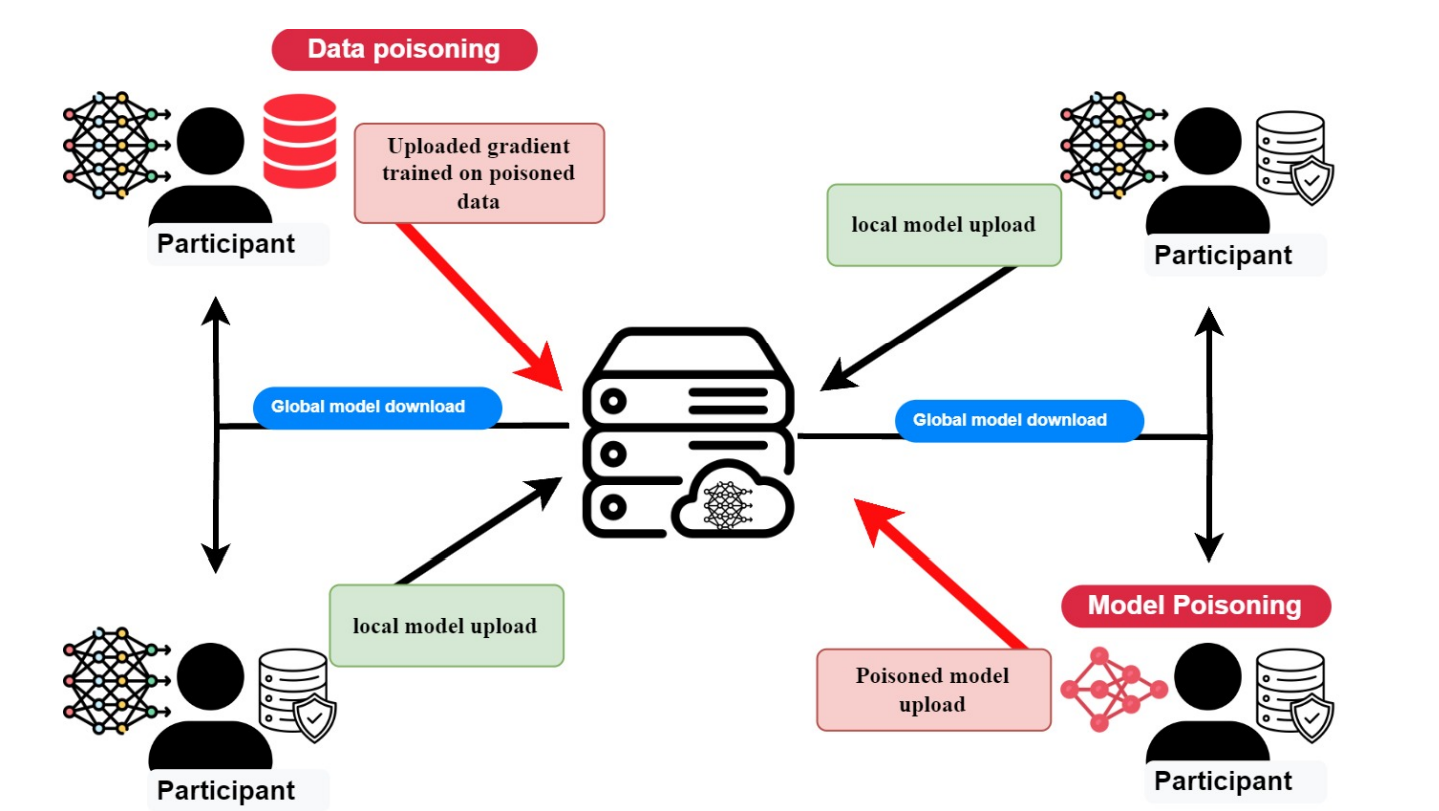
Federated Learning (FL) is increasingly vital for Internet of Things (IoT) applications, yet it remains vulnerable to poisoning attacks that compromise model integrity. This paper presents a systematic literature review of defensive mechanisms against such attacks, specifically within IoT-based FL systems. Through a comprehensive analysis of 140 studies, we provide three primary contributions. First, we establish a detailed taxonomy of defensive strategies, categorizing them into standalone, hybrid, and multi-combined approaches, with a critical evaluation of their suitability for resource-constrained IoT environments. Second, we identify dominant research trends, including a clear preference for hybrid defenses, while exposing a significant gap between idealized experimental assumptions and the practical realities of IoT networks. Finally, we synthesize these findings to pinpoint critical weaknesses in current threat modeling and evaluation metrics, proposing concrete directions for future research to enhance the practical deployability of secure FL in real-world IoT ecosystems.