
British High Commission, FCDO Rep Visits KNUST DIPPER Lab Ahead of FarmSense Launch
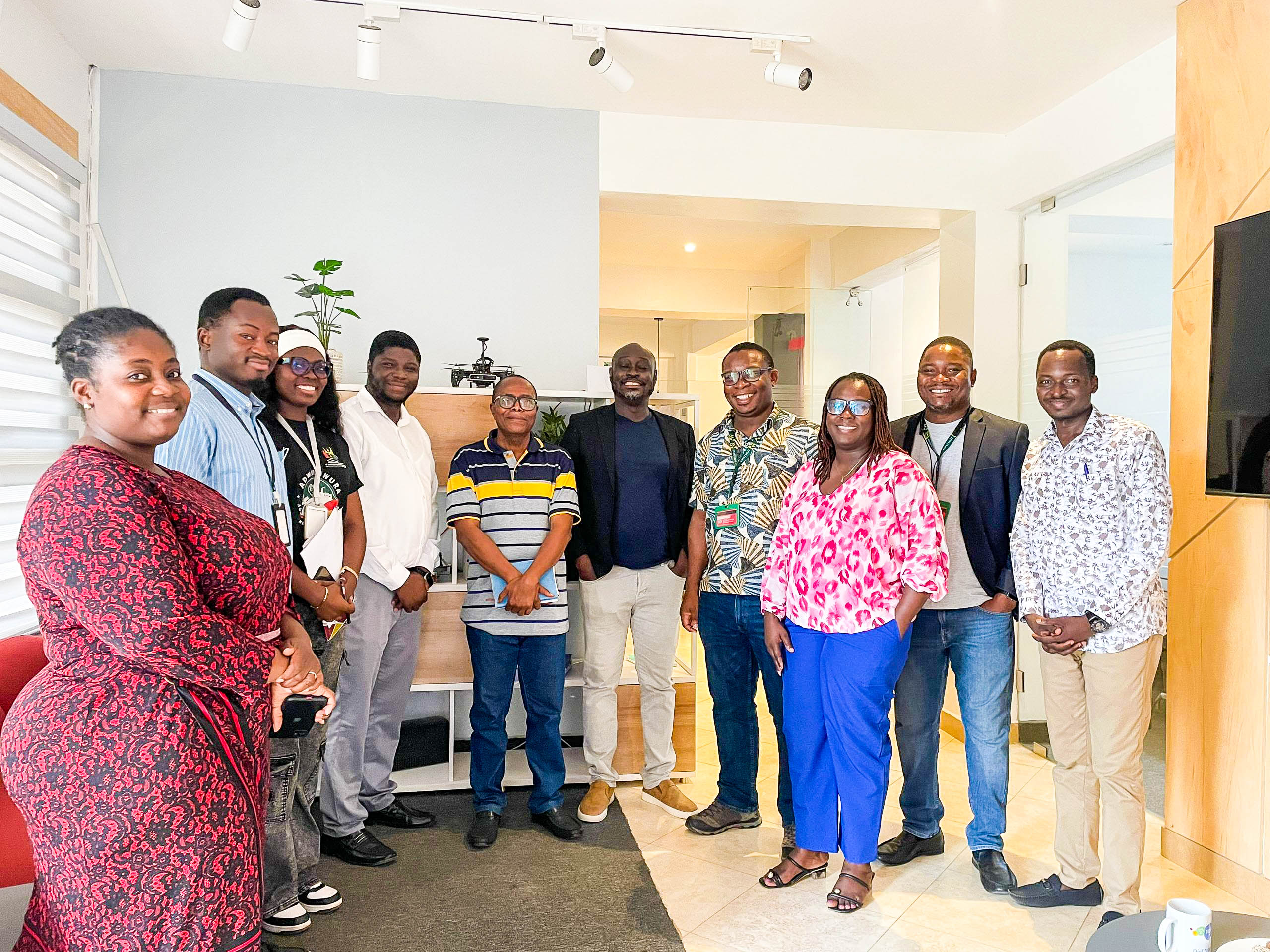
The Science and Technology Network Manager at the British High Commission and representative of the UK Foreign, Commonwealth and Development Office (FCDO), Mr. Johnson Masagotin Singir, has visited the Distributed IoT-Platforms, Privacy and Edge-Intelligence Research (DIPPER) Lab at the Kwame Nkrumah University of Science and Technology (KNUST).
The visit took place ahead of the official launch of the FarmSense commercialisation and capacity building programme, developed by DIPPER Lab in collaboration with Sesi Technologies.
The FarmSense product suite, set to launch on October 20, received funding from FCDO through Innovate UK and the Research and Innovation Systems for Africa (RISA) Fund, supported by the UK International Development.
Speaking during the visit, Mr. Singir commended the progress of research and innovation at KNUST.
He emphasised the importance of partnerships between the UK and Ghana, especially those that connect academia with industry.
“One thing we’ve committed to is supporting UK-Ghana partnerships to achieve real impact. The Knowledge Transfer Partnership (KTP) projects are especially important to me, as they directly link academic research with industry needs. This has long been a focus for the Ghanaian government and the Ministry of Environment, Science, Technology and Innovation,” he said.
The Scientific Director of the DIPPER Lab, Prof. Eric Tutu Tchao, shared updates on the
FarmSense project.
He noted that the lab is preparing to launch its commercialisation and capacity-building programme on October 20.
“We value the strong relationship with our UK partners. The support from RISA is allowing us to take FarmSense to the next level, with a focus on scaling its impact and building local capacity,” Prof. Tchao said.
Other KTP projects at KNUST, funded by the Foreign Commonwealth and Development Office through Innovate UK, which have demonstrated alignment with national development goals, were also presented.
Prof. Jacob Agbenorhevi of the Department of Food Science and Technology highlighted ongoing research on extracting pectin from okra for use as a natural emulsifier in chocolate production.
During the meeting, Prof. Richard Opoku of the Department of Mechanical Engineering also outlined several initiatives, including; The Solar-Powered Cocoa Pod Breaker Project, A Smart Solar-Powered Hydroponics System integrated with evaporative cooling and an Institutional Solar Cooking Project
These projects aim to support sustainable agriculture and energy solutions for local communities.