
DIPPER Lab KNUST secures British Council funding to scale seven innovations
The Distributed IoT Platforms Privacy and Edge Intelligence Research (DIPPER) Lab at the Kwame Nkrumah University of Science and Technology (KNUST) has secured funding from the British Council to expand seven research-led innovations addressing critical public health, environmental, and agricultural challenges in Ghana.
The support, awarded under the British Council’s Going Global Partnerships Grant, will enable the lab to scale technologies that integrate Internet of Things (IoT), artificial intelligence, and data-driven systems to deliver affordable, locally relevant solutions.
About the Going Global Partnerships Programme
The Going Global Partnerships programme supports universities, colleges, and education stakeholders worldwide to collaborate towards stronger, more inclusive, and internationally connected higher education, science, and TVET systems.
Through global partnerships and knowledge-sharing, the initiative strengthens education and research ecosystems that promote equitable social and economic growth while responding to national and global challenges.
Project Leadership and Implementation
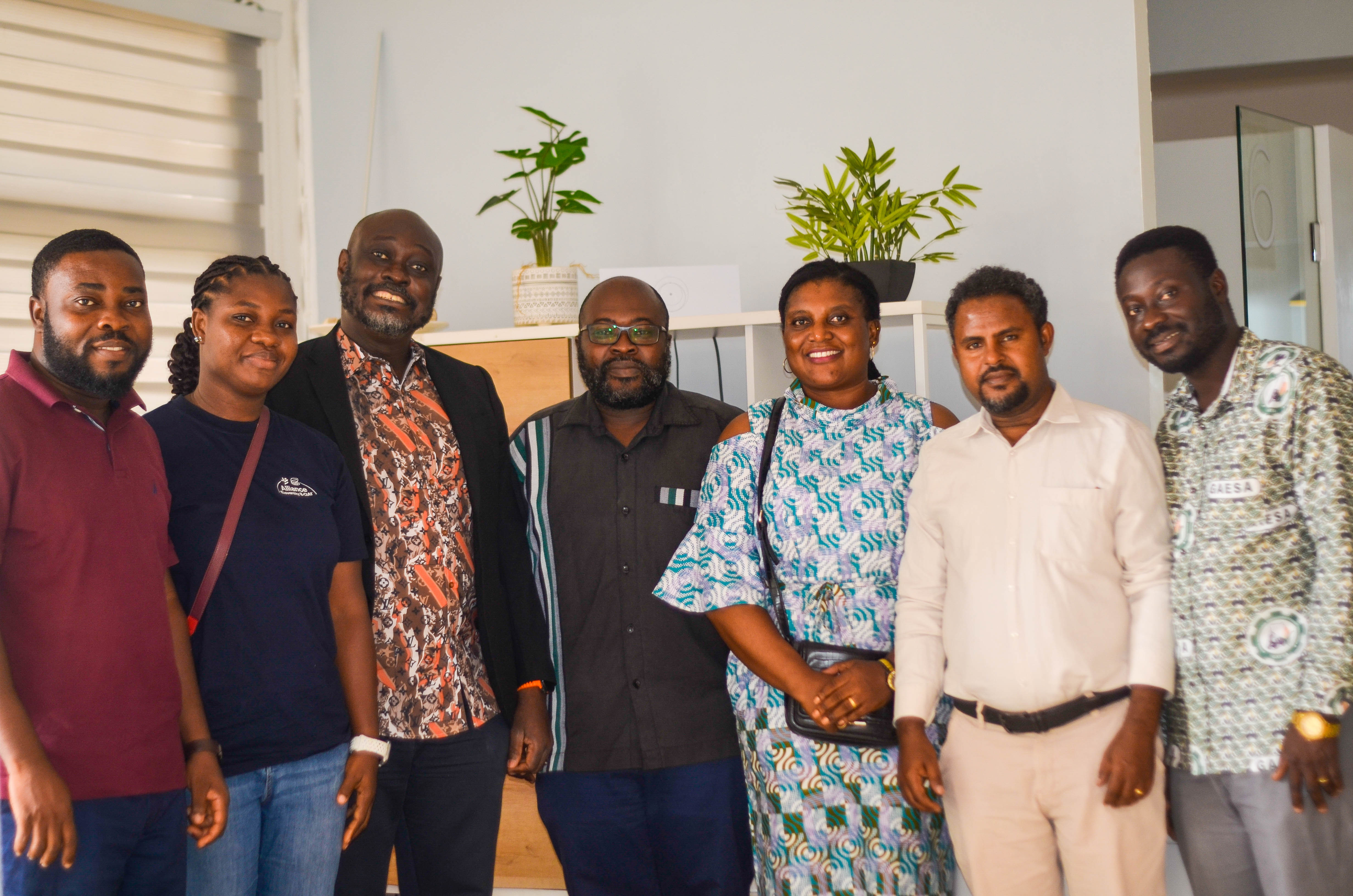
The project is being implemented by a team of emerging innovators at the DIPPER Lab and is managed and supervised by:
Seven Innovations to Be Scaled
The funded projects span environmental monitoring, climate-smart agriculture, neonatal healthcare, and food safety.
1. GalamSense
A real-time IoT-based monitoring network for early detection of heavy-metal pollution in Ghanaian rivers.
The system enables continuous, low-cost monitoring to help authorities trace pollution sources linked to illegal mining and support faster environmental interventions.
Project link: galamsense.dipperlab.com
2. SmartNitro
An AI-powered drone solution that monitors nitrogen levels to support climate-smart farming.
It provides smallholder farmers with affordable, data-driven guidance for efficient fertiliser use and sustainable yield improvement.
Project link: smartnitro.dipperlab.com
3. Automated Neonatal Exchange Transfusion System (ANET)
A low-cost medical device that automates neonatal exchange transfusions for severe jaundice cases.
The innovation improves precision and safety in neonatal care delivery, particularly in low-resource hospitals.
Project link: anet.dipperlab.com
4. Sustainable Neonatal Incubator Using Beeswax Thermal Storage
An incubator designed to maintain safe neonatal temperatures during power interruptions.
It combines beeswax thermal storage with sensor-guided temperature control to ensure reliable and affordable neonatal care.
Project link: NeoWax Dipperlab Project
5. EZYTHERM
A solar-powered thermometer featuring a colour-coded display and voice feedback tailored for Ghanaian households.
It helps caregivers quickly identify fever in children and seek timely medical attention.
Project link: ezytherm.dipperlab.com
6. HerdWatch
A smart cattle monitoring system using GPS, heartbeat, temperature, and motion sensors to deliver real-time insights on animal health and location.
The system helps reduce losses and improves livestock management for farmers.
Project link: aurok.dipperlab.com
7. AgroTrace
A blockchain-based food traceability system designed to improve safety, transparency, and trust within Ghana’s largely informal food supply chains.
By integrating Hyperledger Fabric with IoT data and indigenous knowledge systems, AgroTrace digitises and secures the food production lifecycle from farm to consumer while supporting public health and agricultural innovation.
Project link: agrotrace.dipperlab.com
With support from the British Council, the DIPPER Lab is expected to deepen industry and international collaborations while accelerating the deployment of these innovations to communities across Ghana and beyond.