EJP C-arouNd Team Visits Kintampo Dark Earth Sites to Engage Farmers and Foreign Partners on Soil Health and Regenerative Agriculture
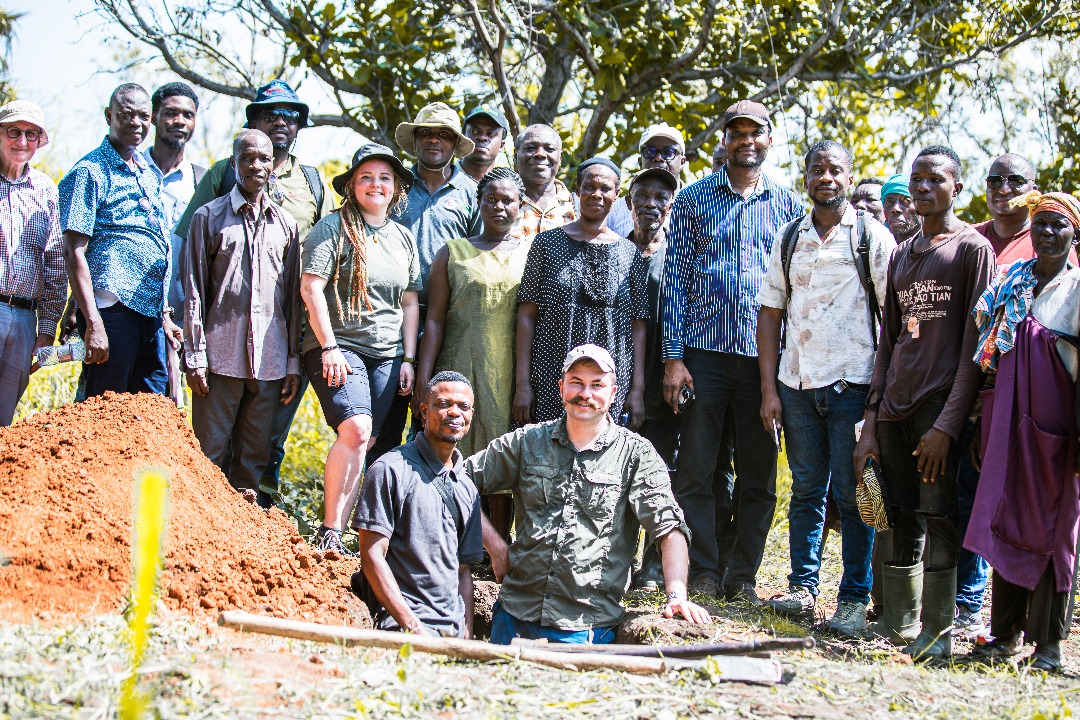
As part of the maiden EJP C-arouNd Workshop on Regenerative Agriculture, Carbon Storage, and Greenhouse Gas Emissions, a team of soil scientists, researchers, and agricultural experts from the Kwame Nkrumah University of Science and Technology (KNUST) and partner institutions embarked on a field visit to the African Dark Earth sites in Kintampo.
The field trip formed part of efforts to bridge scientific research, international collaboration, and community based soil management practices while deepening understanding of how ancient human activities contributed to the formation of “Dark Earth” soils, unique, nutrient-rich soils with high carbon content.
The team was led by Mr. Thomas Adjei-Gyapong, a lecturer and pedologist at KNUST, who provided expert insights into the history and characteristics of the Kintampo Dark Earth sites.
He explained that these soils were formed through “centuries of organic matter deposition and human settlement activity, resulting in enhanced fertility and long-term carbon storage potential.”
During interactions with local farmers and international partners, Mr. Adjei-Gyapong shared observations from the nearby community, where residents have long cultivated crops on the dark earth soils.
“Farmers told us that when they crop on this dark earth, they normally do not use mineral fertilizers, yet they record very good yields,” he noted.
He added that the team hopes continued engagement and education would help farmers better understand the science behind these soils and explore ways to further improve productivity.
“Through workshops and collaboration with researchers, farmers can learn how biochar and small additions of mineral fertilizers could enhance yields even more,” he explained.
Mr. Adjei-Gyapong further highlighted the geological makeup of the area, noting that the dark earth sites lie along a sandstone–shale boundary, contributing to the distinct soil properties observed in the region.
He has been a key collaborator on several field activities, particularly in soil sampling and detailed soil profile descriptions across the project’s study sites.
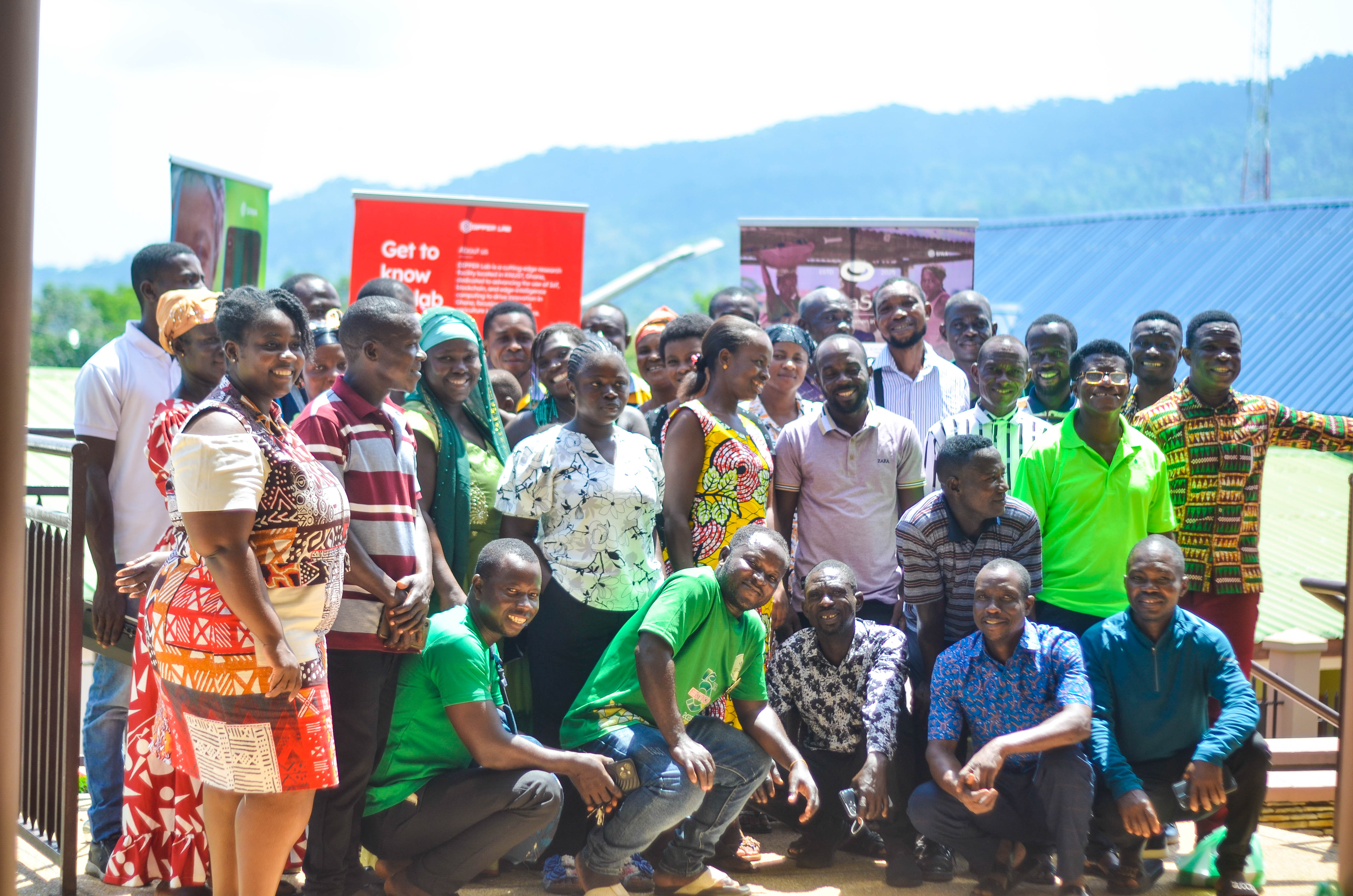
Local farmers participated in demonstrations and training sessions on sustainable soil management, organic matter recycling, and climate-smart farming techniques. The interactions allowed for a two-way exchange of knowledge between scientists, international experts, and community members.
Mr. Emmanuel Baidoo, a PhD student at KNUST whose research focuses specifically on the African Dark Earth phenomenon in Kintampo also shared the aim of his project in a podcast session moderated by Dr. Adonis Dakarai Nciizah on the farm.
The Kintampo field trip followed the EJP C-arouNd Workshop on Regenerative Agriculture, Carbon Storage, and Greenhouse Gas Emissions, held at KNUST.
The week-long workshop brought together scientists and researchers from 13 institutions across Africa, Europe, South America, and North America, fostering cross-continental collaboration on soil health and carbon research.
The event was convened by Dr. Caleb Melenya Ocansey (PhD), Lead for Partnerships at DIPPER Lab, in collaboration with Prof. Vincent Logah, Principal Investigator at KNUST, and Dr. Edward Yeboah, President of the Soil Science Society of Ghana.